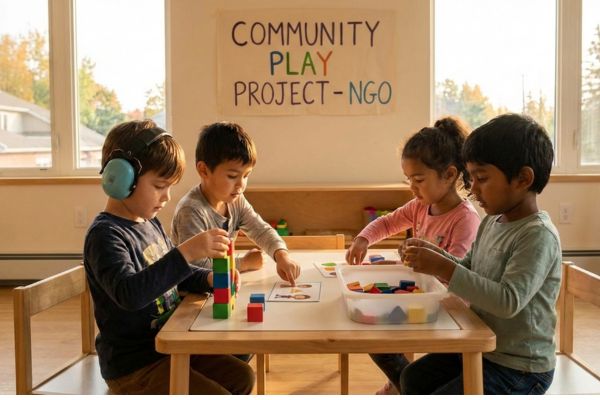
Community-Led Autism Support: The Future of Inclusive Care
Autism support cannot remain confined to clinic walls.
Children do not grow in appointment slots. They grow in kitchens, playgrounds, classrooms, churches, and community centers. They grow where life happens. And when meaningful support does not extend into those spaces, progress becomes fragile.
Community-led autism support is not a passing idea. It is the future of truly inclusive care.
The Growing Need for Accessible Autism Support
According to the Centers for Disease Control and Prevention (CDC), autism now affects approximately 1 in 36 children in the United States. That means nearly every neighborhood, school district, and congregation includes families navigating this journey.
Yet access to consistent, affordable, high-quality support remains uneven:
Waitlists often stretch 6–12 months
Therapy costs can range from $20,000–$60,000 per year
Workforce shortages limit availability
Rural families travel hours for appointments
The need is visible. The infrastructure often is not.
The Financial and Emotional Cost of Autism Care
The financial burden of autism support is staggering. Research estimates that lifetime care costs for an autistic individual can exceed $1.4 million, and significantly more when intellectual disability is present.
Even when insurance mandates exist, families frequently face:
Coverage caps
Denied claims
Out-of-network limitations
High deductibles
But the burden goes beyond money.
Caregivers of autistic children experience higher rates of chronic stress, anxiety, and depression compared to parents of neurotypical children. Sleep disruption, advocacy fatigue, and social isolation take a measurable toll.
When caregiver wellbeing declines:
Consistency of support weakens
Patience shortens
Emotional regulation becomes harder
Children feel the shift immediately
Caregiver health is not separate from child outcomes. It is foundational to them.
Why Early Intervention Cannot Wait
Research consistently shows that early intervention before age three is associated with:
Improved language development
Stronger adaptive functioning
Greater long-term independence
Delay is not neutral.
Without timely support:
Communication gaps widen
Behavioral challenges intensify
Social withdrawal increases
Academic participation becomes more difficult
By adolescence, unmet developmental needs often evolve into secondary mental health challenges such as anxiety or depression. Delay compounds risk.
What Neglect Really Looks Like
Neglect is rarely dramatic.
It often looks like:
Six-month waitlists
Cultural stigma delaying evaluation
Families unable to afford another bill
Rural communities without specialists
The danger is cumulative. It quietly limits potential.
What Is Community-Led Autism Support?
Community-led care asks a transformative question:
What if support did not begin and end with the clinic?
Instead of isolating therapy, community-based models embed structured learning and reinforcement into everyday life. This includes:
Local structured programs
Inclusive group activities
Volunteer-supported engagement
Respite opportunities for caregivers
School and faith-based collaboration
When progress made in therapy is reinforced in natural environments, skills become durable because they are lived, not rehearsed.
The Economic Case for Community Care
Community support is not charity. It is strategic public health.
Preventive, community-based programs:
Reduce long-term crisis costs
Lower hospitalization rates
Decrease reliance on emergency services
Improve independence outcomes
When caregivers receive respite and mental health support, stability improves. When children receive consistent early care, the need for intensive services later often decreases.
Proactive care costs less than reactive crisis intervention.
The Power of Volunteers
Volunteers are central to sustainable community care.
With proper training and professional oversight, volunteers can:
Facilitate structured play
Model social interaction
Support inclusive events
Provide supervised engagement
Beyond logistics, volunteering shifts culture. It transforms autism from a private burden into a shared responsibility. Empathy grows through proximity. Familiarity replaces fear.
Breaking the Cycle of Isolation
Isolation carries real risks.
Children without inclusive environments are more vulnerable to bullying and long-term social anxiety. Families who feel alone often withdraw from community life.
Isolation feeds stigma.
Stigma feeds silence.
Silence delays support.
Community-led care interrupts that cycle by making inclusion visible and practical.
The Future of Inclusive Autism Care
Healthcare systems alone cannot carry the weight of autism support. They are already stretched thin.
The future must be:
Shared
Local
Relational
Structured
Sustainable
When communities step in with training and intention:
Children gain continuity
Caregivers gain relief
Costs become more manageable
Outcomes improve by design
How You Can Be Part of the Solution
Community transformation begins with action.
You can:
Volunteer with structured autism programs
Partner with local organizations to host inclusive activities
Advocate for accessible respite services
Support initiatives that bring therapy closer to home
Invest time, skill, or resources into family-strengthening programs
Because when communities choose to lead, autistic children gain more than services.
They gain belonging.
They gain stability.
They gain a future supported not only by professionals, but by people who show up consistently and care deeply.
Conclusion
Inclusive autism care cannot depend solely on overstretched systems. Clinics play a vital role, but lasting progress happens where children live, learn, worship, and play.
Community-led support strengthens outcomes because it reinforces growth in real life. It protects caregiver wellbeing. It reduces long-term costs. And most importantly, it replaces isolation with belonging.
The future of autism care is not just professional. It is relational. It is local. It is shared.
When communities lead with structure, compassion, and commitment, children do more than receive services, they thrive within environments designed to include them.
