How Applied Behavior Analysis (ABA) Therapy Builds Real-Life Skills
Applied Behavior Analysis (ABA) is one of the most widely implemented evidence-based interventions for children with Autism Spectrum Disorder (ASD). It is grounded in behavioral science and focuses on one central goal: improving meaningful daily functioning through structured learning and reinforcement.
Autism prevalence has increased significantly in recent years. According to the CDC, about 1 in 36 children in the United States is diagnosed with ASD. Globally, estimates suggest approximately 1 in 100 children, although underdiagnosis in many regions likely means the true burden is higher. This rise has made structured developmental interventions like ABA a critical part of pediatric care systems.
What ABA Therapy Means
Applied Behavior Analysis is a scientific approach that studies how behavior is influenced by the environment and how learning occurs over time. It uses reinforcement principles to strengthen useful behaviors and reduce behaviors that interfere with daily functioning.
Rather than focusing on “fixing” a child, ABA focuses on teaching skills that improve independence, communication, and social participation.
Why ABA Is Clinically Important
The significance of ABA lies in its ability to translate behavioral science into practical life outcomes. Children with autism often experience delays in communication, difficulty with social interaction, and challenges in adaptive functioning. Without structured intervention, these difficulties can persist into adolescence and adulthood, affecting education, independence, and quality of life.
Early intervention is particularly important because neurodevelopmental plasticity is highest in early childhood. Research consistently shows that children who receive early and intensive behavioral therapy achieve better language, cognitive, and adaptive outcomes compared to those who start later.
How ABA Builds Real-Life Skills
ABA works by breaking down complex life skills into smaller, teachable steps and reinforcing progress consistently over time. One of its most important contributions is in communication development. Many children who struggle with speech or expressive language learn to communicate their needs through structured reinforcement systems. This reduces frustration and improves interaction with caregivers and peers.
In social development, ABA helps children learn skills that are often not naturally intuitive, such as understanding social cues, engaging in reciprocal interaction, and participating in group activities. These skills are essential for school integration and community participation.
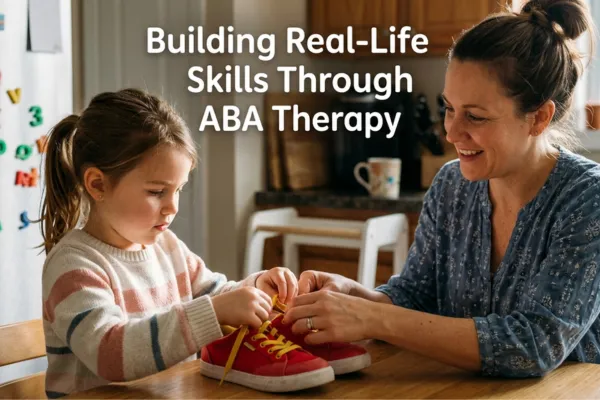
ABA also plays a major role in building daily living skills. Activities such as dressing, eating, toileting, and hygiene are taught systematically so that children gradually become more independent in their routine life. This reduces caregiver burden and improves long-term functional outcomes.
Another key area is emotional and behavioral regulation. Many behavioral challenges in autism are linked to difficulty expressing needs or coping with environmental stressors. ABA identifies the underlying triggers and teaches alternative, more functional responses, leading to improved emotional stability over time.
Finally, ABA supports academic readiness by strengthening foundational skills such as attention, instruction following, and task completion. These abilities are essential before formal learning can effectively take place in classroom settings.
Evidence Supporting ABA
ABA is one of the most researched behavioral interventions in developmental psychology. Foundational studies by O. Ivar Lovaas demonstrated that children who received intensive early behavioral intervention showed significantly improved cognitive and adaptive outcomes compared to control groups.
Subsequent research has supported these findings, particularly when therapy is delivered consistently and started early. Improvements have been observed in language development, adaptive behavior, and reduction of challenging behaviors.
However, outcomes vary depending on intensity, timing, and quality of implementation, highlighting the importance of structured and ethical delivery.
Gaps in Access and Delivery
Despite strong evidence, access to ABA therapy remains uneven. Many families face long waiting times due to shortages of trained professionals. In many regions, especially low-resource settings, services are either unavailable or unaffordable.
Cost remains a major barrier, as intensive ABA programs require significant time and staffing. There is also variability in quality, with some programs not fully adhering to evidence-based or child-centered practices.
Another major gap is late diagnosis, which delays early intervention and reduces the potential benefits of therapy.
Possible Solutions
Improving access requires systemic changes. Expanding the workforce through training programs for behavior analysts and therapists is essential. Integrating developmental screening into routine pediatric care can also help identify children earlier.
Insurance coverage and public funding mechanisms are critical to reducing financial barriers for families. In addition, community-based models can bring services closer to families, particularly in underserved regions.
Telehealth has also emerged as a practical tool for parent coaching and therapy support, helping extend reach where in-person services are limited.
Finally, improving quality standards through regulation and professional guidelines ensures that ABA is delivered ethically and effectively.
Conclusion
Applied Behavior Analysis remains a cornerstone intervention in autism care due to its structured, evidence-based approach to skill development. Its strength lies in its ability to translate behavioral science into meaningful life skills that improve communication, independence, and social participation.
However, the real challenge is not its effectiveness but its accessibility. Bridging gaps in workforce, funding, and early diagnosis is essential if ABA is to reach its full public health potential. When delivered early and appropriately, ABA does not simply modify behavior—it builds functional independence and long-term developmental capacity.
Join us in building a future where no child’s potential is limited by access.
