The Future of Autism Research What Scientists Are Discovering About the Brain
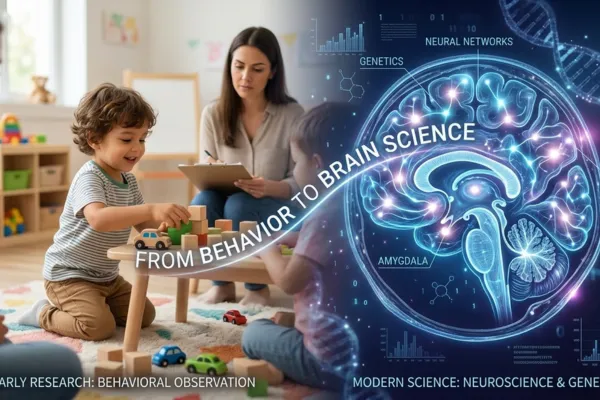
Autism research has undergone a remarkable transformation over the past two decades. For many years, autism spectrum disorder was primarily understood through behavior. Clinicians focused on patterns of communication, social interaction, and repetitive behaviors to identify and diagnose the condition. While behavioral observation remains central to diagnosis, modern science is now examining the biological foundations of autism with far greater precision.
Advances in neuroscience, genetics, and brain imaging technologies have opened a new frontier in understanding autism. Scientists are now able to study how neural circuits develop, how brain regions communicate with each other, and how genetic factors influence brain development from infancy. These discoveries are gradually shifting autism research away from the question of what autism looks like toward the deeper question of why it develops and how the brain processes information differently.
Autism is now widely recognized as a complex neurodevelopmental condition involving differences in brain structure, connectivity, and developmental timing. The growing body of research in neuroscience is revealing how these differences emerge early in life and how they influence learning, behavior, and sensory perception.
Understanding the brain is essential because it provides a biological framework for designing more effective interventions, identifying autism earlier, and supporting autistic individuals throughout the lifespan.
Why Brain Research in Autism Matters
Studying the brain allows researchers to explore the mechanisms that influence development rather than focusing only on outward behavior. This approach is transforming early diagnosis, intervention strategies, and long term support systems.
Earlier Identification and Developmental Windows
One of the most important findings in autism neuroscience is that differences in brain development may appear long before behavioral symptoms become visible.
A landmark longitudinal study published in Nature in 2017 followed infants who had an older sibling with autism, placing them at higher genetic risk. Researchers used magnetic resonance imaging to monitor brain development from six months to two years of age. The study found that infants who later developed autism showed unusually rapid expansion of the brain’s cortical surface area between six and twelve months. By the second year of life, these infants also exhibited accelerated increases in total brain volume.
This early pattern of brain growth predicted later autism diagnosis with approximately 80 percent accuracy.
These findings are significant because they highlight the importance of the earliest stages of brain development. The first five years of life represent a period of extraordinary neuroplasticity, meaning the brain is highly responsive to environmental input and learning experiences.
For example, when a child receives speech and communication therapy at age two rather than age five, the developing brain has a greater capacity to reorganize neural pathways associated with language processing. Early intervention programs consistently demonstrate improvements in language acquisition, social communication, and adaptive functioning.
Understanding the Diversity of the Autism Spectrum
Autism is not a single uniform condition. Some autistic individuals speak fluently but experience sensory sensitivities or social communication challenges. Others may have limited verbal communication yet display strong pattern recognition, memory, or visual reasoning skills.
Neuroscience research has helped explain this variability.
A study published in The Journal of Neuroscience in 2010 investigated brain activity related to facial recognition. Researchers found that autistic participants showed reduced activation in the fusiform face area, a region in the temporal lobe responsible for recognizing and interpreting human faces. Reduced activation in this area may contribute to differences in social attention and facial processing.
Another study published in Biological Psychiatry in 2012 demonstrated altered activity in the amygdala, a brain structure involved in emotional processing and threat detection. Differences in amygdala activation may influence how autistic individuals interpret emotional signals in social environments.
These discoveries suggest that differences in neural processing may underlie many of the behavioral characteristics associated with autism.
Informing More Effective Interventions
Understanding how the brain processes information allows clinicians and therapists to design interventions that support specific neural systems.
For example, behavioral therapies often focus on reinforcing communication behaviors that stimulate language networks in the temporal and frontal regions of the brain. Occupational therapy frequently targets sensory integration pathways that involve the parietal cortex and cerebellum, helping individuals regulate responses to sensory input.
Neuroscience research therefore provides a framework for designing therapies that align with how the brain learns and adapts.
What Neuroscience Is Revealing About the Autistic Brain
Advances in brain imaging technologies such as functional magnetic resonance imaging and diffusion tensor imaging have enabled scientists to observe neural networks in unprecedented detail.
Several consistent patterns have emerged from this research.
Differences in Brain Connectivity
One of the most widely studied features of autism involves differences in neural connectivity.
In 2011, a major study published in the journal Brain examined functional connectivity in autistic individuals. The research found patterns of increased local connectivity within specific brain regions but reduced long distance connectivity between distant regions of the brain.
This means that nearby neurons may communicate very efficiently within a localized area, while communication between distant brain regions may be less coordinated.
This pattern of connectivity may help explain certain cognitive traits seen in autism. Enhanced local connectivity may support strong attention to detail and pattern recognition abilities. At the same time, reduced long range communication between brain networks may influence the integration of complex social and emotional information.
In everyday terms, the brain may process certain types of information very deeply within specialized regions but integrate that information across broader systems less efficiently.
Early Brain Growth Patterns
Another major discovery in autism neuroscience involves patterns of early brain growth.
Research conducted by the University of California Davis MIND Institute and published in Archives of General Psychiatry in 2005 found that some toddlers with autism exhibited significantly larger brain volumes compared to typically developing children.
The enlargement was particularly noticeable in regions involved in social cognition and language processing.
Later studies continued to support the idea that autism may involve an early phase of accelerated brain growth followed by differences in how neural circuits mature and reorganize.
This finding suggests that the timing of brain development plays a crucial role in autism. Neural circuits that develop rapidly during infancy may organize differently, influencing how communication networks and social processing systems evolve.
Sensory Processing and Neural Responsiveness
Sensory sensitivity is one of the most frequently reported experiences among autistic individuals. Many people on the spectrum report heightened responses to sound, light, touch, or visual stimuli.
Neuroscience research has provided insight into the biological basis of these experiences.
A study published in Current Biology in 2007 found that autistic participants demonstrated stronger neural responses in the visual cortex when exposed to simple visual patterns. This heightened neural activation suggests that sensory signals may be processed more intensely within certain cortical areas.
Similarly, research published in Cerebral Cortex in 2013 demonstrated differences in auditory processing pathways that may contribute to sensitivity to sound.
These findings help explain why environments such as crowded classrooms, noisy public spaces, or brightly lit rooms can feel overwhelming for some autistic individuals.
Understanding these sensory processing differences has influenced the design of sensory friendly classrooms, therapeutic environments, and public accommodations.
The Role of Genetics in Autism Research
Genetics represents one of the most rapidly advancing areas in autism research.
Large scale genomic studies have revealed that autism is influenced by a complex network of genetic variations rather than a single gene mutation.
Genetic Contributions to Autism
In 2020, a major international study published in Nature Genetics analyzed the genomes of more than thirty five thousand individuals. Researchers identified over one hundred genes associated with increased autism risk.
Many of these genes are involved in synapse development, neuronal signaling, and the formation of neural circuits during early brain development.
Synapses are the points of communication between neurons. When synaptic development is altered, the efficiency of communication between brain cells can change.
For example, mutations in genes such as SHANK3, SCN2A, and CHD8 have been linked to autism because they influence how neurons form connections and transmit signals.
These genetic findings suggest that autism often involves differences in how neural communication networks are built during early development.
Gene Environment Interaction
Genetics alone does not fully explain autism. Researchers increasingly recognize that gene environment interactions also play a role.
Environmental factors such as prenatal health, maternal immune responses, and early developmental conditions may interact with genetic predispositions.
For example, research published in JAMA Psychiatry in 2014 found that advanced parental age and certain prenatal exposures may slightly increase autism risk when combined with genetic susceptibility.
This interaction highlights the complexity of autism and the importance of studying both biological and environmental influences.
From Research to Real World Support
Scientific discoveries are most meaningful when they translate into real improvements in clinical care, education, and community support.
Neuroscience research has already influenced several areas of autism care.
Improved screening programs now encourage developmental monitoring during early pediatric visits. Evidence based therapies are increasingly grounded in neuroscience principles that emphasize communication development, structured learning, and sensory regulation.
Educational systems have also adopted strategies informed by brain research. Visual learning supports, structured routines, and sensory sensitive classroom environments are examples of approaches that align with current understanding of cognitive processing in autism.
These changes reflect the growing integration of scientific knowledge into everyday support systems.
Challenges and Future Directions
Despite significant progress, autism research still faces important challenges.
Autism is highly heterogeneous, meaning it presents differently across individuals. This diversity makes it difficult to develop universal models that apply to every person on the spectrum.
Another challenge involves global representation in research. Much of the existing scientific literature comes from North America and Europe. Researchers are increasingly calling for expanded studies in Africa, Asia, and other regions to better understand autism across diverse populations.
Finally, translating research findings into public policy and healthcare systems remains a complex process. Scientific discoveries must be integrated into educational systems, insurance policies, and healthcare infrastructure to ensure that families benefit from new knowledge.
Conclusion
The future of autism research lies at the intersection of neuroscience, genetics, and developmental science. Each new discovery brings scientists closer to understanding how the brain develops and how autism emerges within that process.
Research over the past twenty years has revealed differences in neural connectivity, early brain growth patterns, sensory processing, and genetic pathways. These insights are transforming how clinicians diagnose autism, how therapists design interventions, and how educators support learning.
While many questions remain unanswered, the progress already achieved offers a promising path forward. As neuroscience continues to illuminate the workings of the developing brain, the ultimate goal remains clear.
To translate scientific discovery into meaningful support systems that allow autistic individuals to learn, communicate, and thrive throughout their lives.
Join us in building a future where no child’s potential is limited by access.
