The Role of Early Educational Support in Cognitive Development
Early childhood represents one of the most critical periods in human development, a phase during which the foundations of cognition, behavior, and learning are established with remarkable speed and sensitivity to environmental input. By the time a child enters formal schooling, a substantial portion of brain architecture has already been constructed, shaped not only by genetic predisposition but also by the quality and consistency of early experiences. For children with cognitive disabilities, this period carries even greater significance because it offers a narrow but powerful window during which targeted support can meaningfully influence developmental trajectories. Early educational support, therefore, is not merely an adjunct to care but a central determinant of long-term cognitive, academic, and social outcomes. From a public health perspective, it stands as one of the most efficient and impactful interventions available, capable of altering life course outcomes at both the individual and population levels.
Neurobiological Foundations of Early Cognitive Development
The significance of early educational support is rooted in the biology of the developing brain, which undergoes rapid and complex changes during the first years of life. Neural circuits are formed at an extraordinary rate, with synaptogenesis occurring most intensely in infancy and early childhood. According to the World Health Organization, more than eighty percent of brain development occurs before the age of five, with early experiences directly shaping the strength and efficiency of neural connections. These processes are governed by activity dependent mechanisms, meaning that repeated stimulation reinforces certain pathways while unused connections are gradually eliminated through synaptic pruning. This dynamic system allows the brain to adapt to its environment but also renders it highly sensitive to deprivation or inadequate stimulation.
In children with cognitive disabilities, these neurodevelopmental processes may be altered, resulting in delays or inefficiencies in areas such as language, memory, and executive function. However, the principle of neuroplasticity provides a critical opportunity for intervention. The same mechanisms that allow for vulnerability also enable adaptation when appropriate inputs are introduced early. Structured educational support during this period can strengthen underdeveloped neural pathways, enhance connectivity, and improve overall cognitive functioning. The biological argument is therefore straightforward. Early intervention does not merely support development; it actively shapes the architecture of the brain in ways that have lasting consequences.
Evidence Base Supporting Early Educational Intervention
The effectiveness of early educational support is supported by a substantial body of longitudinal and experimental research. Studies consistently demonstrate that children who receive early intervention show improved outcomes across multiple domains, including cognition, language, and academic achievement. A study published in Pediatrics in 2011 reported that children who participated in early developmental programs achieved significantly higher cognitive and language scores compared to those who did not receive such interventions. These gains were not transient but persisted into later childhood, suggesting that early support creates durable developmental advantages.
Long term evidence further reinforces these findings. The Abecedarian Project, initiated in the 1970s, followed participants from infancy into adulthood and found that early educational intervention was associated with higher levels of educational attainment, increased employment rates, and improved socioeconomic outcomes. Economic analyses conducted by James Heckman demonstrate that investments in early childhood yield annual returns of seven to ten percent through improved productivity and reduced social costs. These findings position early educational support not only as a developmental necessity but also as a high value public investment with measurable economic and societal benefits.
Timing and Developmental Trajectories
The timing of intervention plays a decisive role in determining developmental outcomes because cognitive processes are cumulative and interdependent. Delays in one domain often cascade into others, creating compounded challenges over time. For example, early language delays can impair social interaction, which in turn affects emotional regulation and learning engagement. Similarly, deficits in attention and executive function can limit a child’s ability to benefit from educational experiences, leading to a widening gap between potential and performance.
Evidence from global health research underscores the magnitude of this issue. A study published in The Lancet in 2016 estimated that over 250 million children in low and middle income countries are at risk of not reaching their developmental potential due to insufficient access to early stimulation and education. Intervening during early childhood allows practitioners to address developmental challenges before they become entrenched, whereas delayed intervention often requires more intensive and costly measures. The strategic implication is clear. Early educational support operates during a period of maximal plasticity, making it both more effective and more efficient than interventions introduced later in life.
Core Domains Targeted by Early Educational Support
Early educational support is designed to strengthen the foundational domains that underpin learning and adaptive functioning. These domains include language and communication, executive function, and social emotional development, each of which plays a critical role in shaping overall cognitive capacity.
Language and communication development form the basis for both academic learning and social interaction. Research published in Child Development in 2013 demonstrated that children exposed to language rich environments in early childhood exhibit significantly better vocabulary, comprehension, and cognitive performance in later years. For children with cognitive disabilities, targeted speech and language interventions can improve both receptive and expressive communication, thereby enhancing their ability to engage with their environment and access educational opportunities.
Executive function encompasses a set of cognitive processes including working memory, cognitive flexibility, and inhibitory control, all of which are essential for goal directed behavior. Studies published in Developmental Psychology in 2015 have shown that early interventions targeting these skills lead to improved academic performance and behavioral regulation. Social and emotional development, meanwhile, is closely linked to cognitive growth, as children who are able to regulate their emotions and form positive relationships are better equipped to participate in learning environments. Together, these domains illustrate the multifaceted nature of early educational support and its capacity to influence multiple aspects of development simultaneously.
Models of Effective Early Educational Support
Effective early educational support is characterized by structured, evidence based approaches that address multiple domains of development in a coordinated manner. These models often integrate play based learning, therapeutic interventions, and caregiver involvement to create a comprehensive support system.
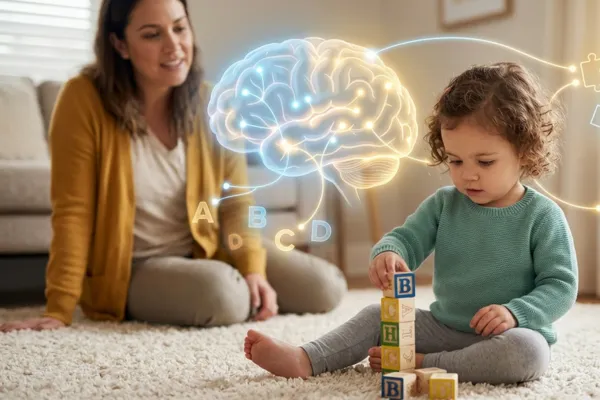
Structured play based learning represents a cornerstone of early intervention. Activities such as storytelling, matching exercises, and guided play are designed to stimulate cognitive processes while maintaining engagement. These activities may appear simple but are strategically designed to build neural connections that support memory, attention, and problem solving.
Multidisciplinary intervention is another critical component of effective support. Children with cognitive disabilities often require input from multiple professionals, including speech therapists, occupational therapists, and behavioral specialists. This integrated approach ensures that different aspects of development are addressed simultaneously, resulting in more comprehensive and sustained improvements.
Practical Components of Early Educational Support
Structured Learning Through Play
Structured play is one of the most effective methods for promoting early cognitive development because it integrates learning within natural and engaging activities. Unlike unstructured play, which may occur without specific goals, structured play is intentionally designed to target particular cognitive skills such as memory, attention, and language. Activities such as matching games, sequencing tasks, and guided storytelling are used to reinforce neural pathways while maintaining the child’s interest and participation. These activities also promote repetition, which is essential for strengthening synaptic connections and enhancing learning efficiency.
In addition to cognitive benefits, structured play supports social and emotional development by encouraging interaction, cooperation, and communication. Children learn to take turns, follow instructions, and respond to social cues within a safe and supportive environment. For children with cognitive disabilities, these interactions are particularly important because they provide opportunities to practice skills that may not develop spontaneously. Over time, structured play contributes to improved engagement, better behavioral regulation, and increased readiness for formal educational settings.
Multidisciplinary and Therapeutic Approaches
Multidisciplinary intervention involves the coordinated efforts of professionals from different fields to address the diverse needs of children with cognitive disabilities. Speech therapy focuses on improving communication skills, occupational therapy addresses sensory processing and motor development, and behavioral interventions aim to enhance learning and adaptive behavior. This integrated approach ensures that multiple domains of development are addressed simultaneously, leading to more comprehensive outcomes.
The effectiveness of multidisciplinary approaches lies in their ability to provide targeted and individualized support. Each child presents with a unique profile of strengths and challenges, and interventions must be tailored accordingly. By combining different therapeutic modalities, practitioners can address underlying deficits while reinforcing emerging skills. This approach not only improves immediate developmental outcomes but also enhances the child’s ability to function independently in educational and social environments over time.
Caregiver Involvement and Home Based Reinforcement
Caregivers play a central role in early educational support because they provide the most consistent and influential learning environment. Training caregivers to implement simple strategies at home extends the impact of formal interventions and ensures that learning occurs continuously rather than in isolated sessions. According to the UNICEF, children who receive responsive caregiving combined with early learning opportunities demonstrate significantly better outcomes across cognitive, social, and emotional domains.
Home based reinforcement also allows for the integration of learning into daily routines, making interventions more practical and sustainable. Activities such as reading, conversation, and guided play can be incorporated into everyday interactions, creating a rich and supportive environment for development. For children with cognitive disabilities, this consistency is particularly important because it reinforces learning across different contexts and promotes generalization of skills. Caregiver involvement therefore transforms early educational support from a clinical intervention into a continuous developmental process.
Long Term Outcomes and Public Health Implications
The benefits of early educational support extend beyond childhood, influencing academic achievement, employment opportunities, and overall quality of life. Children who receive early intervention are more likely to achieve educational milestones, require fewer specialized services later in life, and demonstrate greater independence as adults. These outcomes have significant implications not only for individuals but also for society as a whole.
From a public health perspective, early educational support represents a cost effective strategy for improving population level outcomes. By reducing the need for intensive interventions later in life, early support decreases the burden on healthcare, education, and social service systems. The long term economic benefits, combined with improved quality of life, make early intervention a critical component of sustainable development strategies. Investing in early childhood is therefore not only a moral imperative but also a practical necessity for building resilient and productive societies.
Conclusion
Early educational support occupies a central position in the landscape of cognitive development, offering a powerful means of shaping developmental trajectories during a period of heightened neuroplasticity. The evidence from neuroscience, developmental psychology, and economics converges on a single conclusion. Early intervention works, and it works best when implemented during the earliest stages of life.
For children with cognitive disabilities, the stakes are particularly high, as early support can mean the difference between limited potential and meaningful participation in education and society. The challenge moving forward is not to generate more evidence but to translate existing knowledge into accessible and equitable systems of care. When early educational support is prioritized, the result is not only improved individual outcomes but also a stronger and more inclusive society.
Join us in building a future where no child’s potential is limited by access.
